
Peace Institute IV: Training of Trainers on Religion, Interfaith Understanding, and Peacebuilding
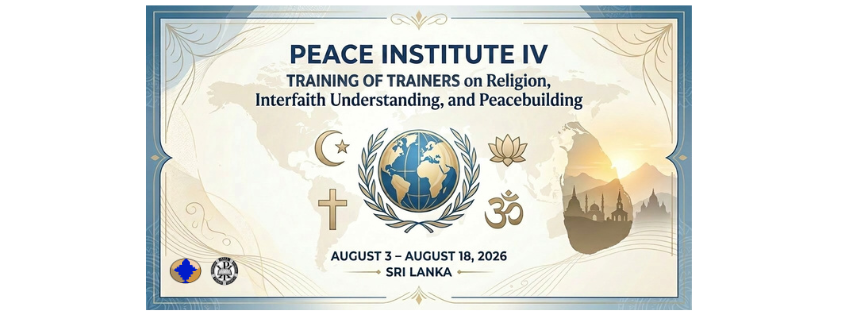
Program Overview: Peace Institute as a Training of Trainers (ToT)
This is the second phase of the program, in which the Interfaith Cooperation Forum (ICF) transforms the Peace Institute into a Training of Trainers (ToT). Previously known as the “Mini-School of Peace,” this phase is designed as a focused training program on one or two related basic themes. The program follows the “value chain” concept, as most participants come from the School of Peace (SoP), ICF thematic workshops, or other related courses. This ensures continuity, depth of learning, and sustained impact, as participants build on existing foundations and translate learning into practice.
The Training of Trainers emphasizes both content and facilitation skills. Participants will not only deepen their knowledge of religion, interfaith relations, and peacebuilding but also acquire the facilitation skills, methodologies, and confidence needed to design, deliver, evaluate, and replicate activities across diverse contexts.
Background
Asia is home to rich religious, cultural, and ethnic diversity. It has a long history of coexistence and mutual exchange among communities of different faiths and traditions. At the same time, many communities continue to face challenges related to religious polarization, discrimination, misinformation, hate speech, and the rise of violent extremism. Young people are often at the center of these circumstances. They can be vulnerable to narratives and online hate, but they are also among the active agents for peace, dialogue, and understanding. Across Asia, youth-led initiatives are increasingly promoting interfaith solidarity, inclusive communities, and nonviolent engagement.
This training of trainers is designed to strengthen the capacity of young people from diverse religious and cultural backgrounds to become facilitators and advocates for interfaith understanding,inclusion, and peacebuilding within their communities. The Asia and PacificAlliance of YMCAs (APAY) recognizes that interfaith cooperation is essential inits work for justice and peace. Sri Lanka, which is home to diverse religious diversity and has a rich experience of navigating post-conflict transformation, provides a meaningful context for this training.
The training combines experiential learning, interfaith engagement, community exposure visits, and participant-led practicum sessions to ensure both personal transformation and practical skill-building.
Objectives:
During the training period, participants are able to:
- Articulate the core teachings and peace-related values of their own religious tradition, alongside those of other major religions in Asia.
- Identify, articulate, and reflect on shared values and ethical principles across faith traditions that serve as a foundation for interfaith collaboration, particularly regarding peace, environmental care, human dignity, and social responsibility.
- Analyze the religious, cultural, and socio-political dynamics that contribute to conflict and peace in Asian contexts.
- Demonstrate practical skills in interfaith dialogue, intercultural communication, and conflict transformation.
- Develop context-sensitive approaches to addressing prejudice, hate speech, and other issues.
- Demonstrate facilitation skills for youth-centered peacebuilding initiatives.
- Design, facilitate, and evaluate training sessions.
Participants and Selection
Fifteen (15) participants ranging from 20to 35 years old will be accepted. ICF will identify and screen participants based on nominations from ICF alumni and YMCAs. They will be chosen based on their interest, capacity, and commitment to applying the knowledge and skills gained during the training. ICF will also observe a balance in the representation of gender, geographic representation across ICF focus countries, religious traditions, members of the LGBTQIA+ community, and persons with disabilities (PWDs).
Participants are expected to review their foundational knowledge on the topic before the training. During the program, they will work in teams to develop a training module and implement it through a facilitated practicum with invited local participants.
The certificate-holders of the ICF Peace Institute are expected to serve as facilitators in some ICF activities, as well as in activities in their local or national contexts beyond ICF.
What support could ICF provide?
● ICF will provide accommodation and meals during the training period.
● Reimbursement of the cheapest travel expenses from the point of origin to the training venue and return.
What contribution is expected from the participants?
● Participants who require a visa are expected to cover the costs themselves.
● All participants who do not require a visa and thus do not have visa expenses are expected to pay a participation fee of USD 30.
● All participants are requested to pay a Green Fee of USD15 to offset the carbon emissionsfrom their travel. APAY uses this amount to fund projects to combat the effects of climate change.
● Cover the travel insurance expenses themselves.
Application Requirements:
● Possesses a background or basic knowledge of religion, interfaith relations, or peacebuilding.
● Hold a valid passport for at least six (6) months during the training period.
● Secure a nomination from the nominating alumni, organization, or YMCA.
Interested applicants can apply here: https://forms.gle/upCyxqgv1EW8Uhmo9.
The application deadline is 29 June.